The Real Magic
A tarot interpretation service designed as a full end-to-end product system where a bot, a mini app, and an agent work together to guide the user from question to spread to monetized interpretation. The live product is available at basilarcana.com
Case study by Basil Artemov — Founder — product vision, service architecture, launch strategy, UX flows, monetization model, interface system, and brand packaging across bot, mini app, and agent layers
Client
The Real Magic
Period
2026
Platforms
Bot, mini app, and mobile product surfaces
Role
Founder
product vision, service architecture, launch strategy, UX flows, monetization model, interface system
Work stages
connected product surfaces launched as one story
service layers working as one E2E journey
fast-build tarot platform positioned against category leaders
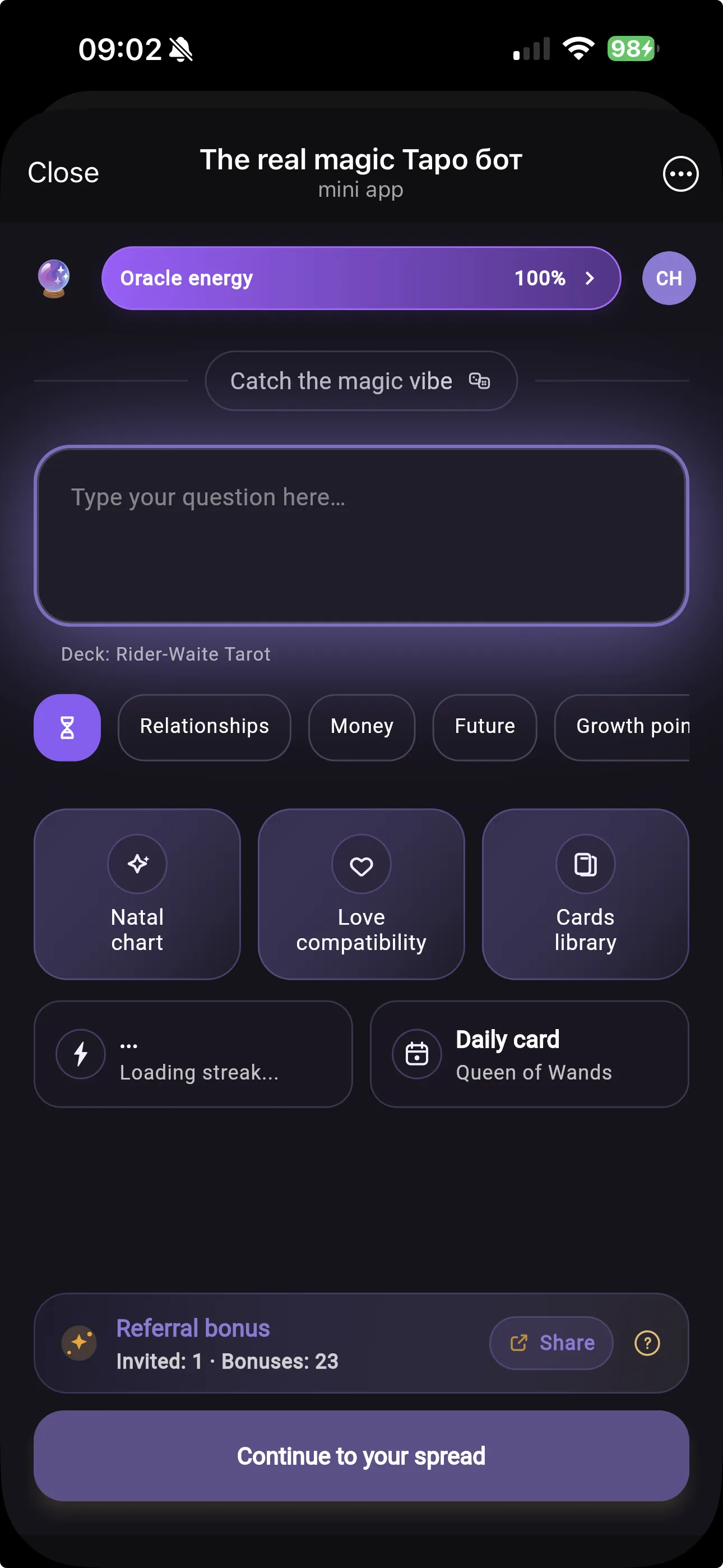
Interface gallery
 tap: zoom
Overview
The Real Magic was designed as more than a tarot app. It was conceived as a full service system where a bot, a mini app, and an agent work together to give the user one coherent end-to-end reading experience
The product needed to make tarot feel approachable, interactive, and monetizable without collapsing into a thin content app or a gimmicky chat bot. The live product can be explored at basilarcana.com
Business Context
The tarot category is full of fragmented products: some are content-heavy, some are bot-first, and some over-index on decoration while underdelivering on actual product logic. The opportunity was to build something structurally stronger and faster
The service had to support discovery, interpretation, upsell, habit formation, and return usage across multiple surfaces while still feeling like one brand and one product experience
Design Process
I reviewed competitor products in tarot and adjacent ritual categories to see where they break down across clarity, conversion, and continuity of experience
Then I defined a shorter, stronger service architecture that could launch quickly while still covering the core product loop from initial question to spread selection to premium interpretation and follow-up engagement
As founder, I shaped the product vision, defined how the bot, mini app, and agent should reinforce each other, packaged the monetization logic, and drove the product from concept to a launch-ready service with a much stronger category position than a typical tarot MVP
- Competitive review across tarot apps, bots, and guided ritual products
- Service mapping across bot, mini app, and agent touchpoints
- Fast product scoping around the strongest user and monetization moments
- A unified visual and interaction system for launch under a compressed timeline
Service Design
What makes the product different is the way its parts reinforce each other. The bot handles entry, momentum, and conversation framing. The mini app handles richer control, selection, payment logic, and visual depth. The agent layer helps make the interpretation feel more alive and more complete
Together they create a product that feels continuous rather than stitched together
Key Features
The service was deliberately shaped around features that give it a stronger position against category leaders
- A complete tarot bot for lightweight conversational entry
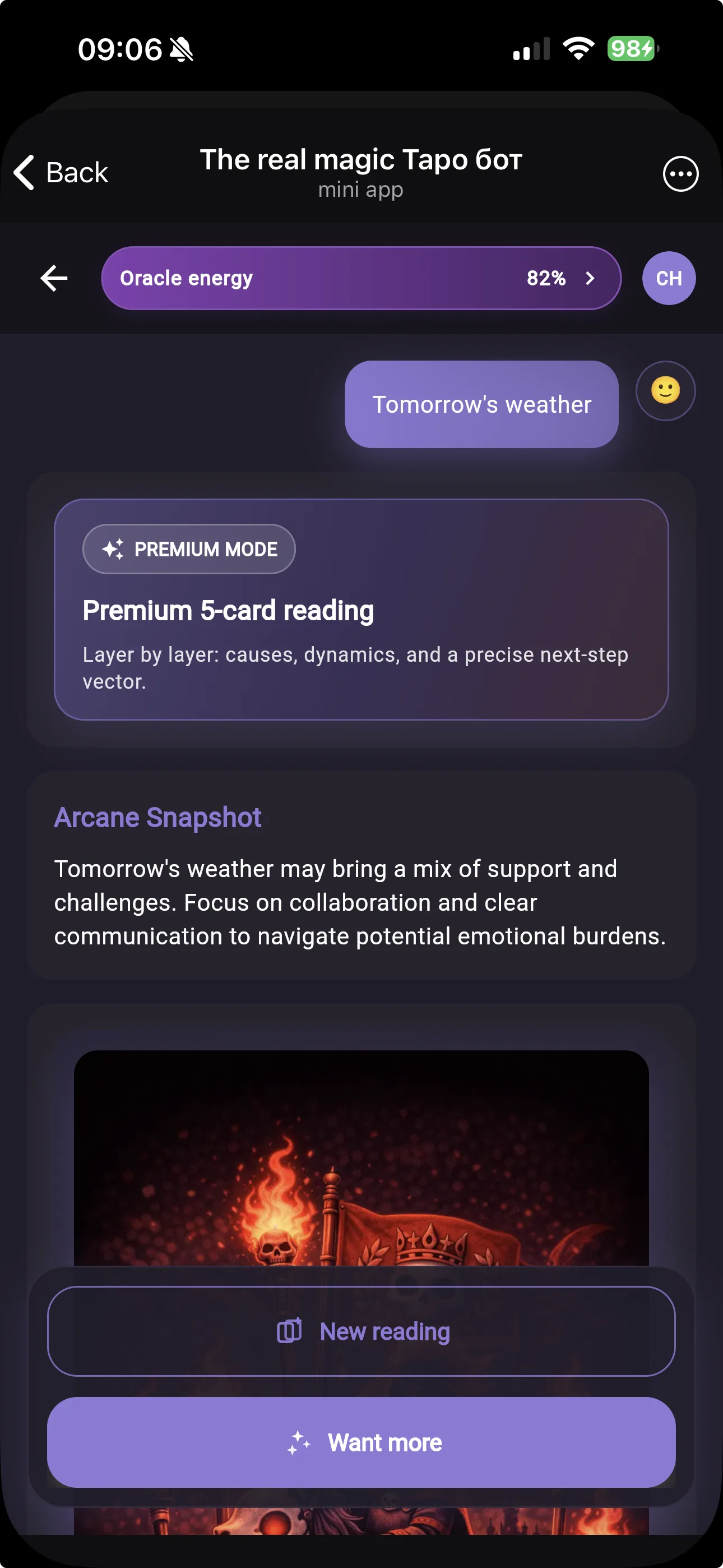
- A full mini app for spreads, cards, premium readings, and monetization
- An agent-assisted interpretation layer to make readings feel more responsive and more personal
- A tighter E2E product journey from question to ritual to interpretation to repeat use
tap: zoom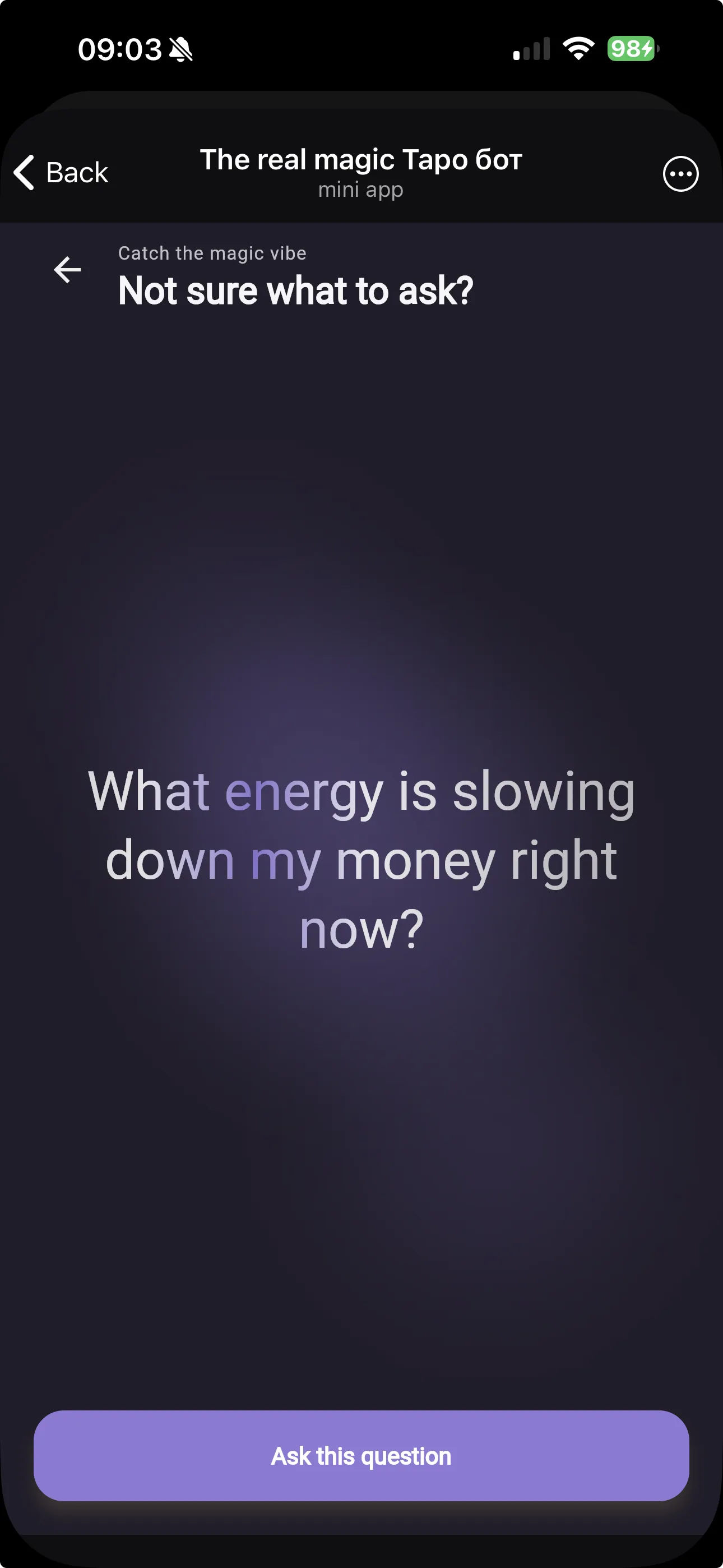 tap: zoom
 tap: zoom
Outcome
The final result was a much more complete tarot platform than the category usually offers at launch speed: clearer in structure, stronger in monetization logic, and more coherent across touchpoints
This case shows how I can analyze a ritual category, find where competitors feel fragmented, and build a sharper platform quickly enough to compete with the leaders while still feeling like a real product system. The live product can be explored at basilarcana.com