Government Payments
A government payments platform for a major bank in Qatar, designed to let individuals and businesses pay taxes, fines, duties, and other state fees through a single compliant digital channel
Case study by Basil Artemov — Senior Product Designer — discovery, UX architecture, interaction design, UI, design system alignment, stakeholder reviews
Client
Qatar Bank
Period
2026
Platforms
Web and mobile banking
Role
Senior Product Designer
discovery, UX architecture, interaction design, UI, design system alignment, stakeholder reviews
Work stages
fewer payment errors
fewer support tickets
growth in digital channel adoption
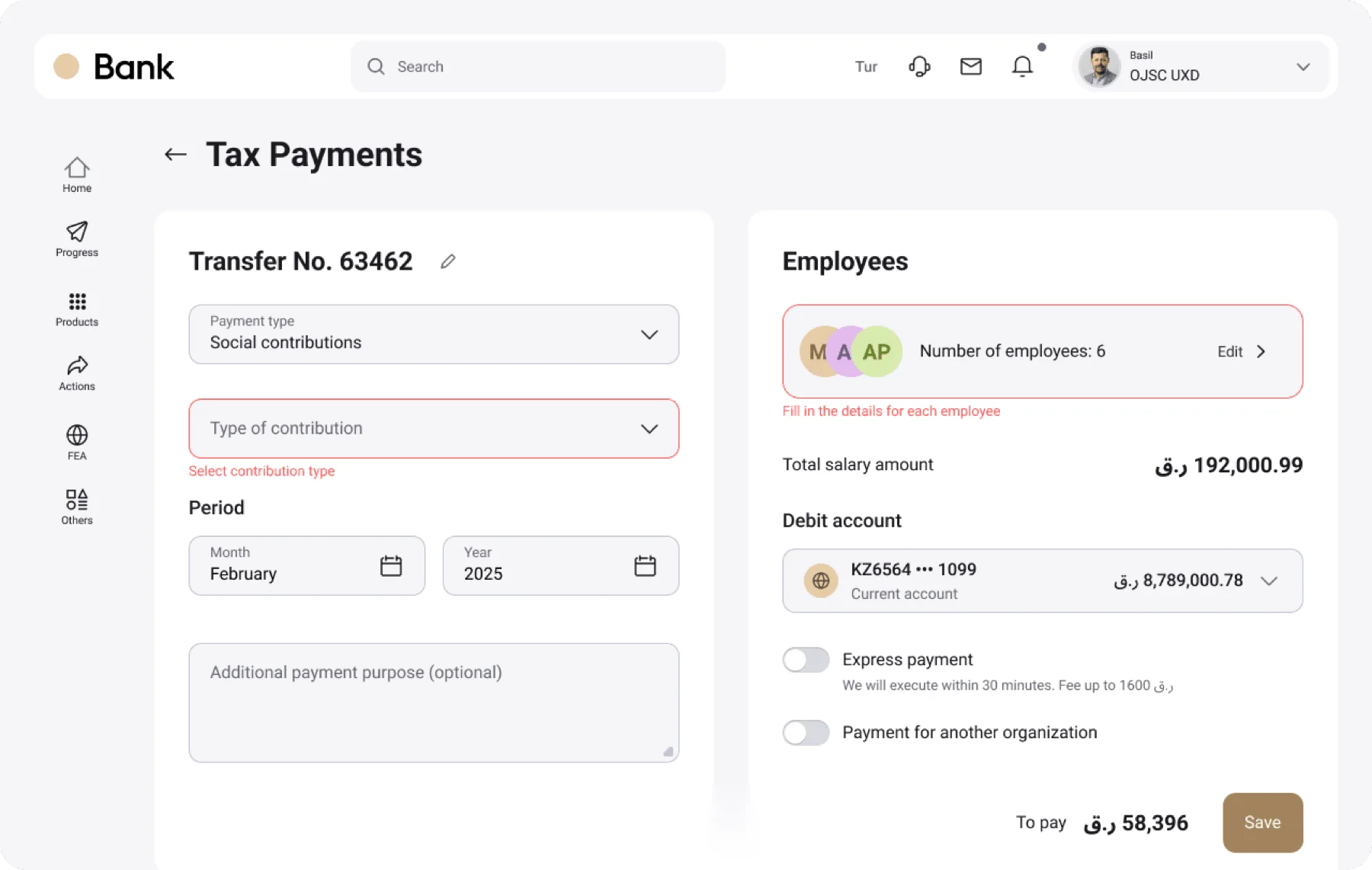
Interface gallery
 tap: zoom
Overview
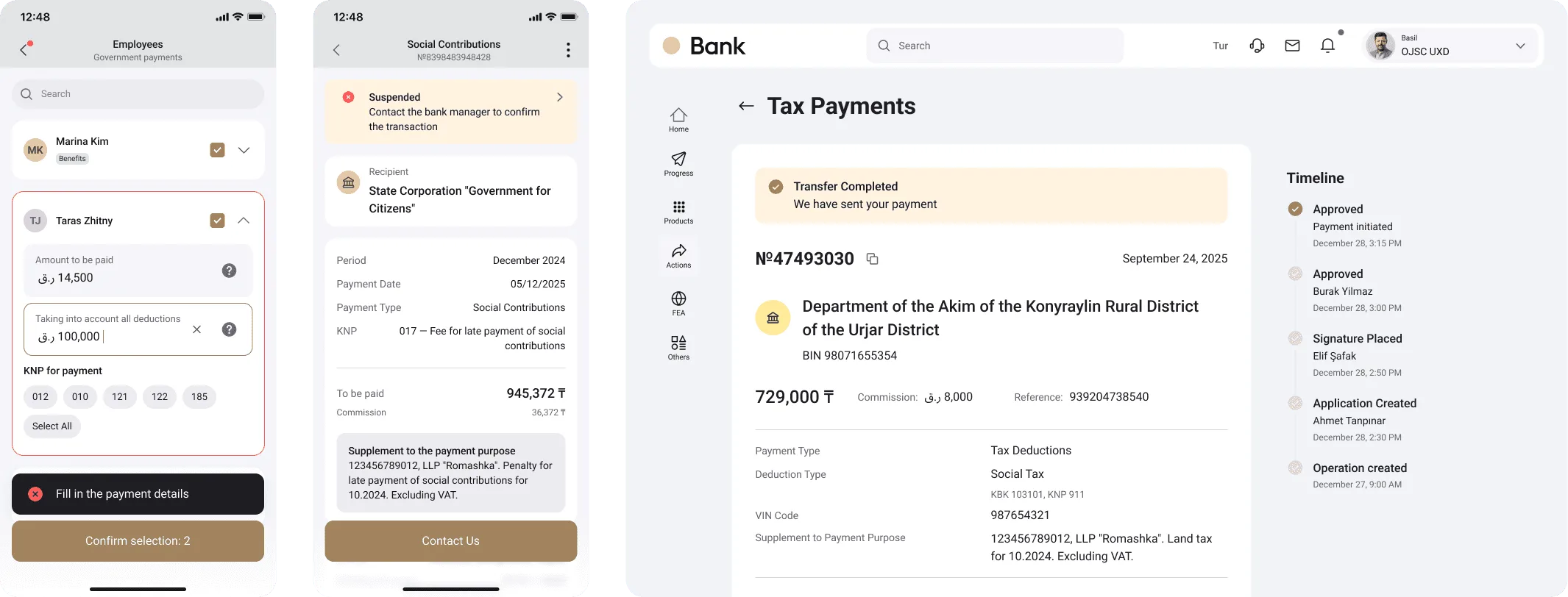
This case centers on a government payments platform for a major bank in Qatar. The product consolidates taxes, fines, duties, and other mandatory fees into one digital experience
The core problem was not visual novelty but risk reduction: these are transactions with no room for incorrect input, weak validation, or ambiguous confirmation
 tap: zoom
Business Context
Government-related payments carry regulatory risk, refund complexity, and operational cost whenever users make mistakes. The bank needed to increase adoption of digital payments while reducing manual correction and support load
The solution also had to stay compliant, auditable, and scalable across both retail and SME scenarios
Design Process
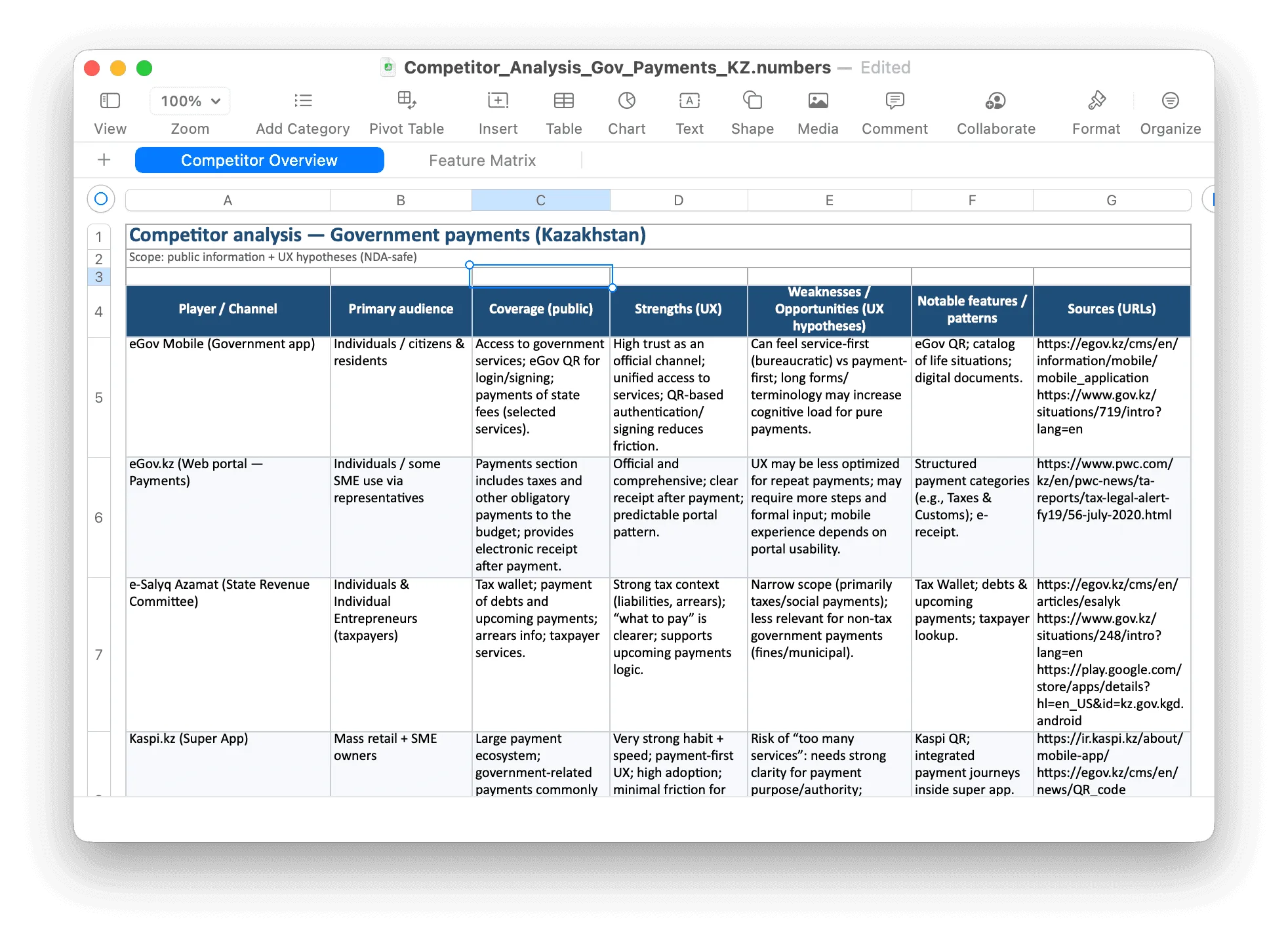
The process was structured around competitor review, JTBD and customer journey work, UX testing, corner-case validation, and iterative cross-team reviews
A lot of emphasis was placed on staging and UAT, because the product had to ship consistently across web, iOS, and Android while holding up under legal and operational review
- Competitor analysis and parallel delivery alignment
- Journey mapping around discovery, validation, confirmation, and post-payment stages
- In-person and moderated UX testing to validate critical flows
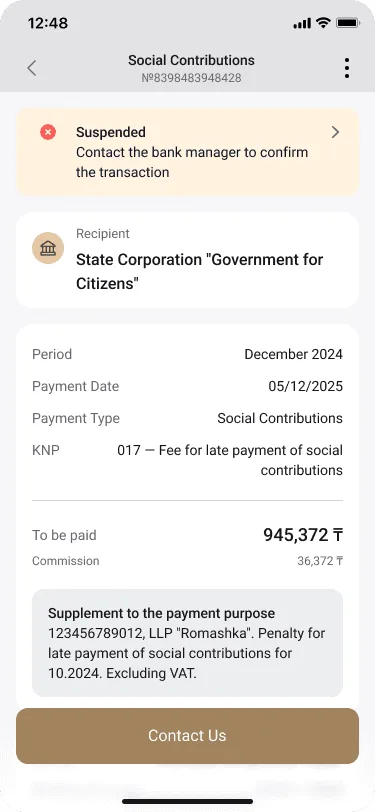
- Dedicated work on corner cases, exceptions, and irreversible states
 tap: zoom
Constraints & Requirements
The project required precision, clarity, and consistency more than expressive visuals. Regulatory and compliance requirements shaped the interaction model directly
Different authorities had different validation rules, transaction transparency was mandatory, and the system had zero tolerance for incorrect data submission
- KYC, AML, and audit expectations
- Different validation logic across government entities
- Mandatory double-check and confirmation patterns
- Safe employee management and bulk-signing scenarios
Results
After launch, the platform showed measurable improvements across accuracy, support, and channel shift
- 38% reduction in payment errors
- 42% decrease in related support tickets
- 29% growth in digital channel adoption
Outcome
The final solution focused on trust, clarity, and compliance, so users could complete critical payments with confidence rather than hesitation
It demonstrates experience in high-responsibility financial flows, government-related payment systems, products in regulated environments, and scalable UX for retail plus SME banking
 tap: zoom