Digital Onboarding & KYC
A fintech UX case study for SME digital onboarding, KYC verification, tariff activation, and business card issuance in regulated banking
Case study by Basil Artemov — Senior Product Designer — UX architecture, KYC flows, interaction design, UI, stakeholder alignment
Client
Qatar Bank
Period
2025
Platforms
Web and mobile banking
Role
Senior Product Designer
UX architecture, KYC flows, interaction design, UI, stakeholder alignment
Work stages
onboarding completion growth
fewer KYC errors and resubmissions
less manual verification workload
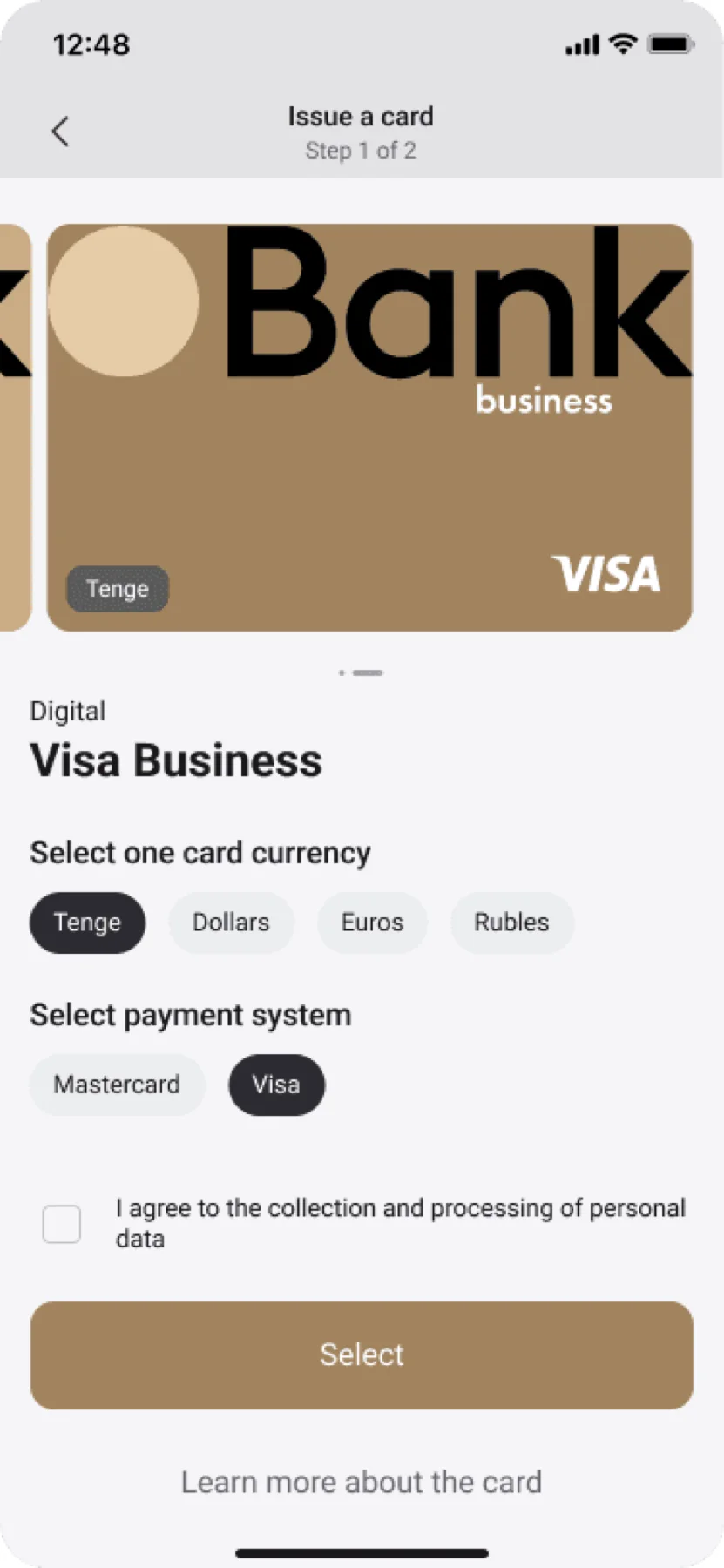
Interface gallery
 tap: zoom
Overview
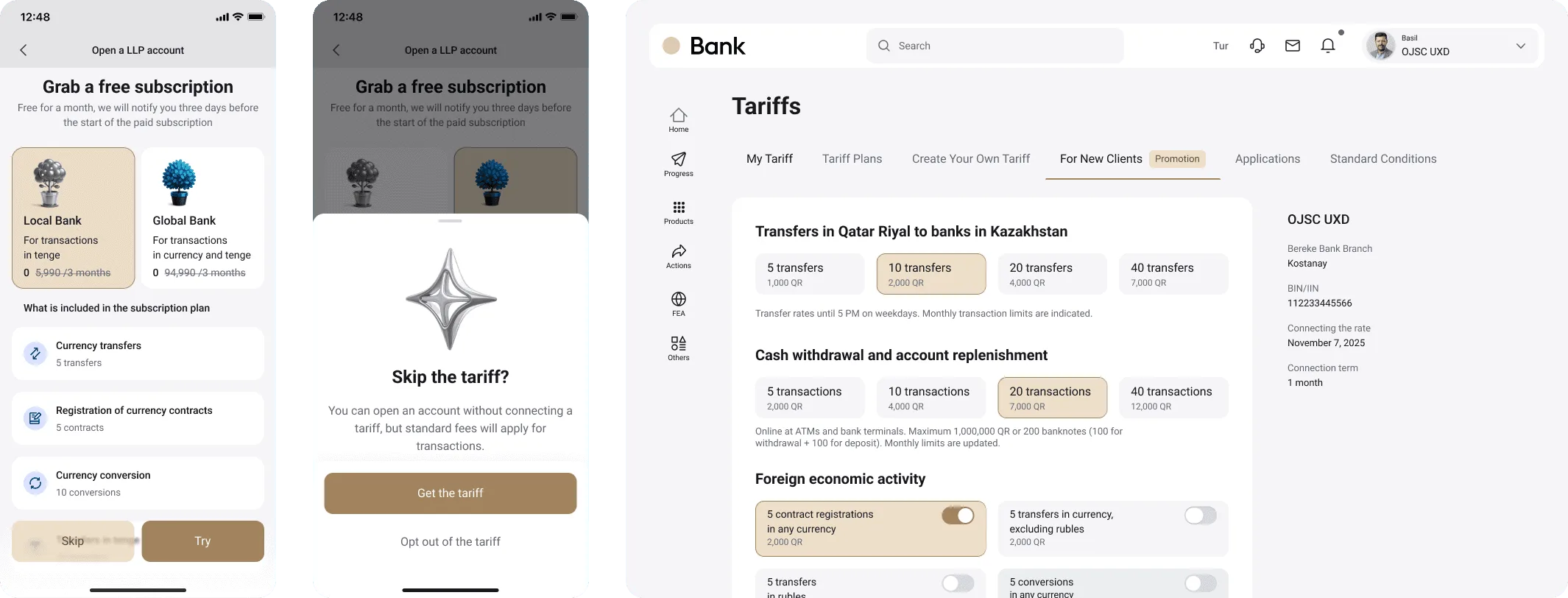
This case covers a digital onboarding and KYC experience for SME customers in a major bank in Qatar. It included two connected flows: tariff activation and business card account opening with issuance
The design goal was to balance regulatory compliance, business clarity, and speed, especially for company owners and representatives navigating more complex verification than retail users
 tap: zoom
Business Context
For SME clients, onboarding speed directly affects how fast they can start operations, access payments and government services, and trust the bank as a working financial partner
At the same time, SME onboarding requires business and personal KYC, beneficial ownership validation, and role-authority confirmation, so the challenge was to reduce drop-off and manual review without oversimplifying the legal flow
Design Process
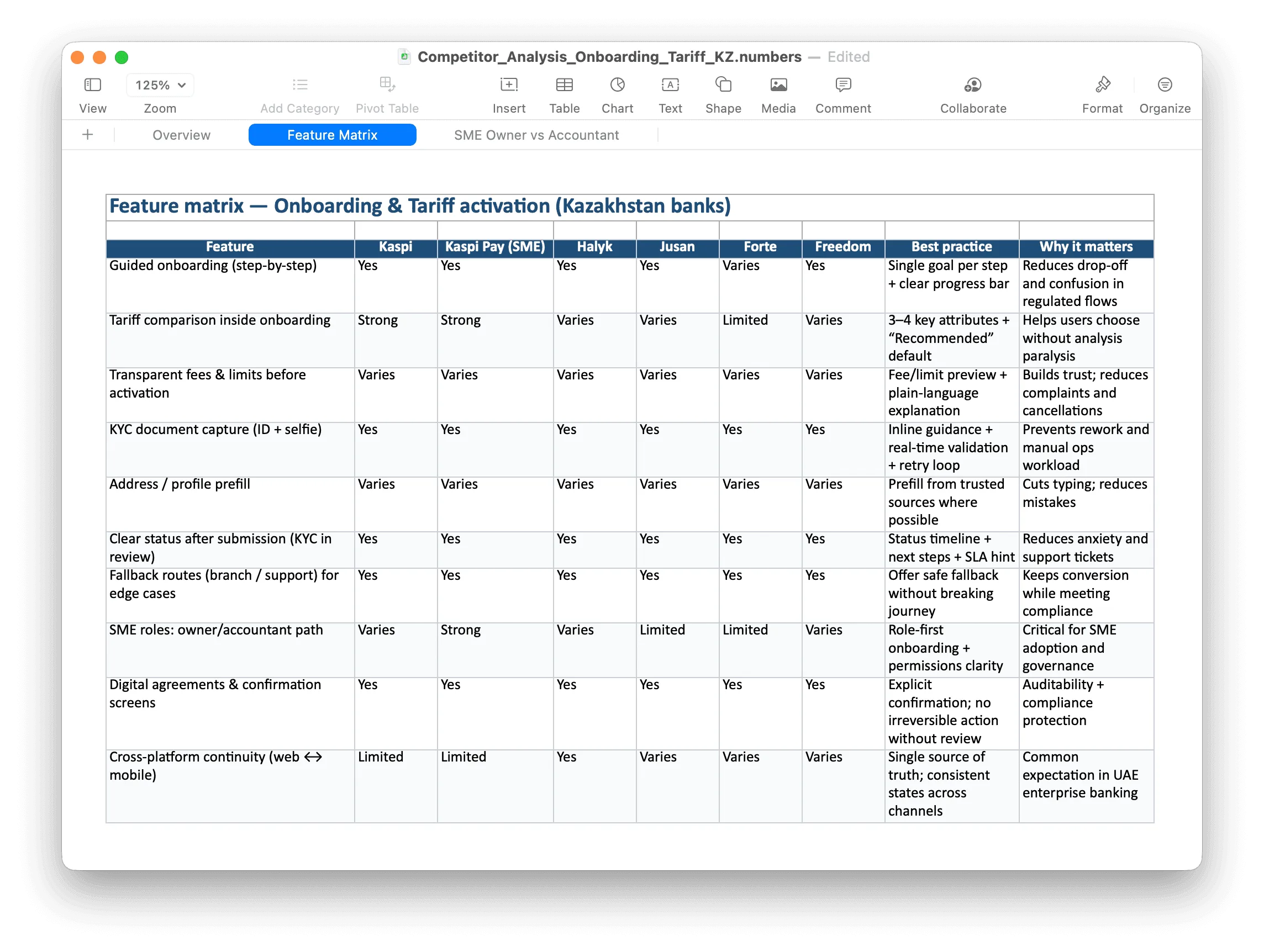
The process included competitor analysis, journey mapping for IP and OJSC scenarios, UX testing, and iteration with legal, design system, and delivery teams
The work paid special attention to tariff choice clarity, progressive disclosure, trust cues, and follow-up interventions for users who skipped important decisions
- Competitor benchmarking around KYC resubmissions and tariff clarity
- Journey mapping for registration, video identification, and tariff activation
- In-person and moderated UX testing
- Iteration across UX writing, compliance, and implementation reviews
 tap: zoom
KYC & Compliance Design
The source frames the central UX challenge as reducing SME anxiety around compliance. Instead of making legal steps feel hostile, the flow was structured to feel manageable and explicit
Important patterns included explaining why business data is required, avoiding duplicate entry across connected flows, showing verification progress and blockers, and using consistent confirmation patterns for legal actions
Results
After launch, the onboarding system improved both customer completion and internal operational efficiency
- 24% increase in onboarding completion rate for SME customers
- 34% reduction in KYC-related errors and re-submissions
- 41% reduction in manual verification workload for operations teams
Outcome
The final solution improved clarity, confidence, and efficiency during one of the most critical parts of the SME customer journey
It highlights practical experience with onboarding systems, compliance-heavy flow design, tariff selection logic, and regulated product UX where legal structure and user trust need to work together