Card Operations
A fintech UX case study for SME debit card controls, employee spending limits, permissions, and card operations across web and mobile banking
Case study by Basil Artemov — Senior Product Designer — UX architecture, cross-platform flows, permissions logic, UI, stakeholder alignment
Client
Qatar Bank
Period
2025
Platforms
Web and mobile banking
Role
Senior Product Designer
UX architecture, cross-platform flows, permissions logic, UI, stakeholder alignment
Work stages
increase in self-service limit changes
fewer support requests on card limits
growth in active card-control usage
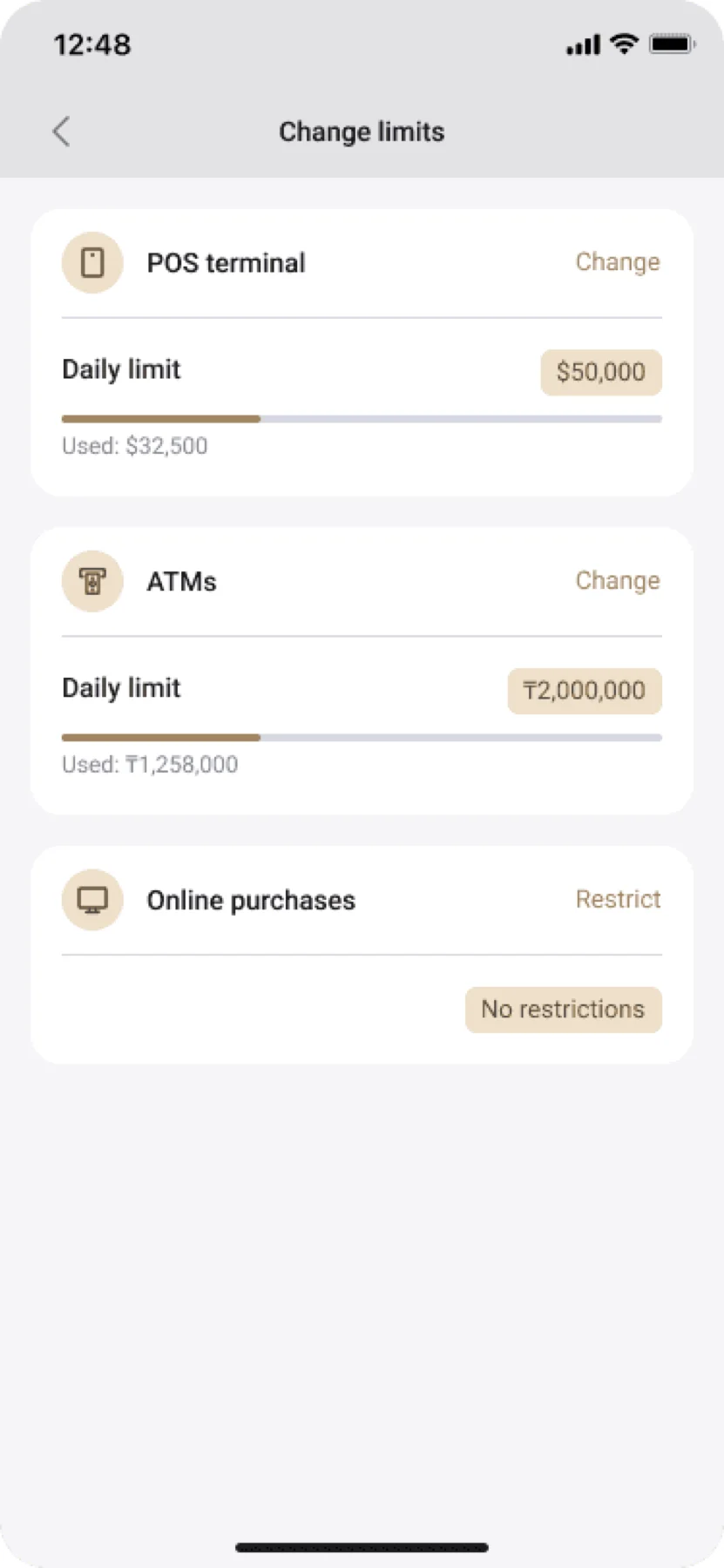
Interface gallery
 tap: zoom
Overview
This case describes a cross-platform experience for managing limits on SME business cards in both web and mobile banking. It lets owners and authorized users view, adjust, and control employee card spending with one consistent logic model
The project sits close to real business continuity: limit changes are routine operational actions, but poor clarity or permissions design can immediately create friction for finance teams
 tap: zoom
Business Context
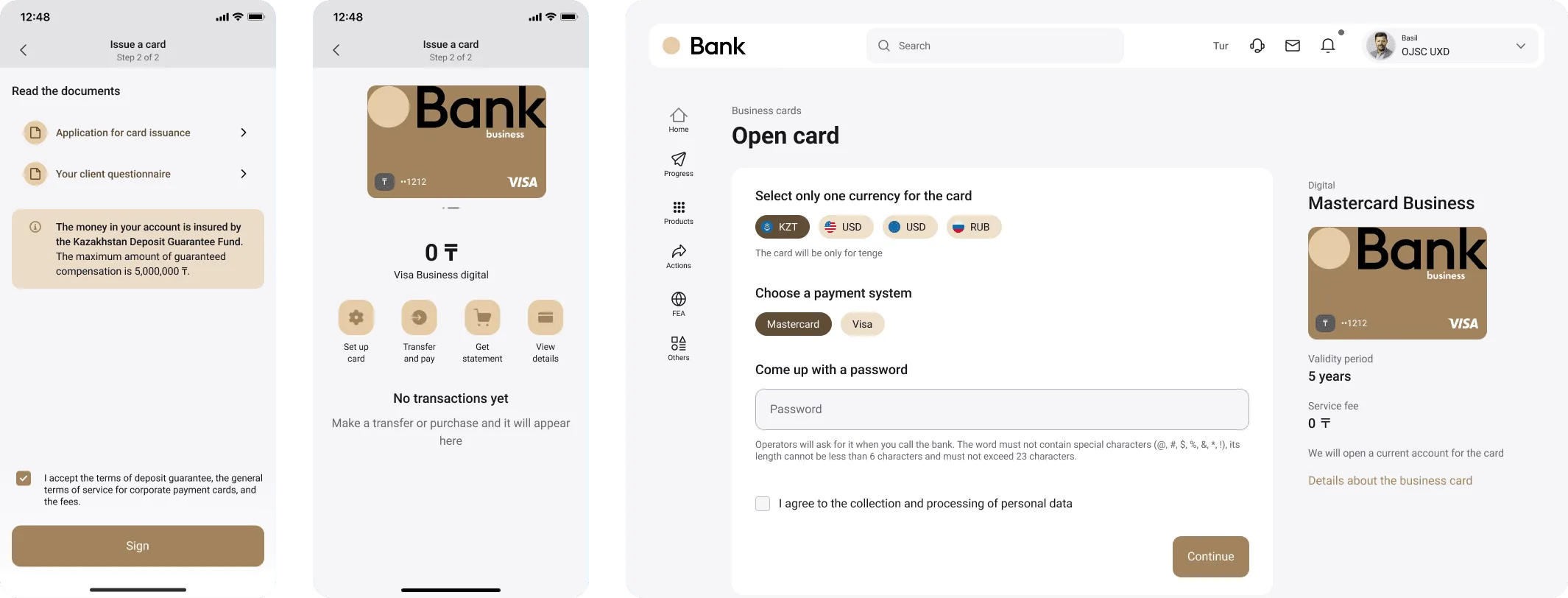
SME customers rely on web banking for administration and mobile banking for day-to-day control. The bank needed a safe operational layer that respected those patterns rather than forcing the same behavior everywhere
The solution had to reduce support and operational cost, fit the broader SME banking ecosystem, and still make employee card control feel direct and manageable
Design Process
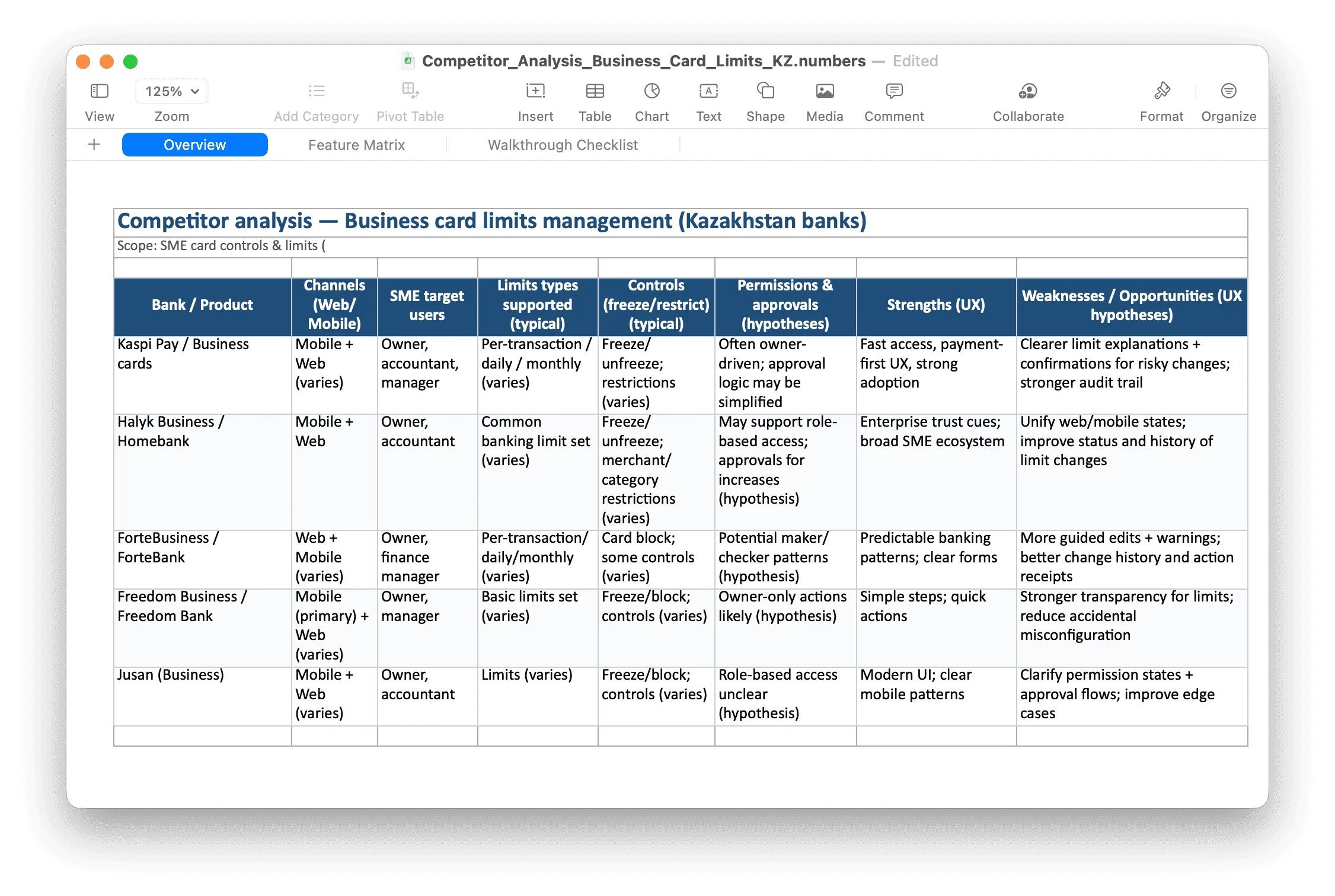
The source structure includes competitor analysis, user-journey mapping, UX testing, and iteration with legal and implementation stakeholders
A key input was understanding where unclear limits, confusing pricing, or weak role clarity create failure points, then translating those risks into cleaner requirements for both channels
- Competitor review and requirement synthesis
- End-to-end journey mapping across discovery, control, confirmation, and post-change states
- In-person and moderated UX tests
- Iteration across writing, legal review, system constraints, and development
 tap: zoom
UX Strategy
The central design problem was how to make powerful financial controls feel understandable and safe on both platforms. The source frames this as a question of confidence, not just configuration
- One source of truth across web and mobile
- Visibility before edit
- Explicit confirmation for sensitive actions
- Predictable and reversible interactions where possible
Results
The released feature improved self-service, reduced support dependency, and increased active use of card controls
- 31% increase in self-service limit changes by SME clients
- 38% reduction in support requests related to card limits
- 26% growth in active usage of card controls across channels
Outcome
The final solution gave SME clients more confidence and flexibility while reducing operational load for the bank
It demonstrates experience in cross-platform SME banking features, card management, permission-based UX, and high-responsibility interactions in regulated environments